Why Europe travels together: the drivers behind the July–August peak across the continent’s short-term rental markets
Introduction
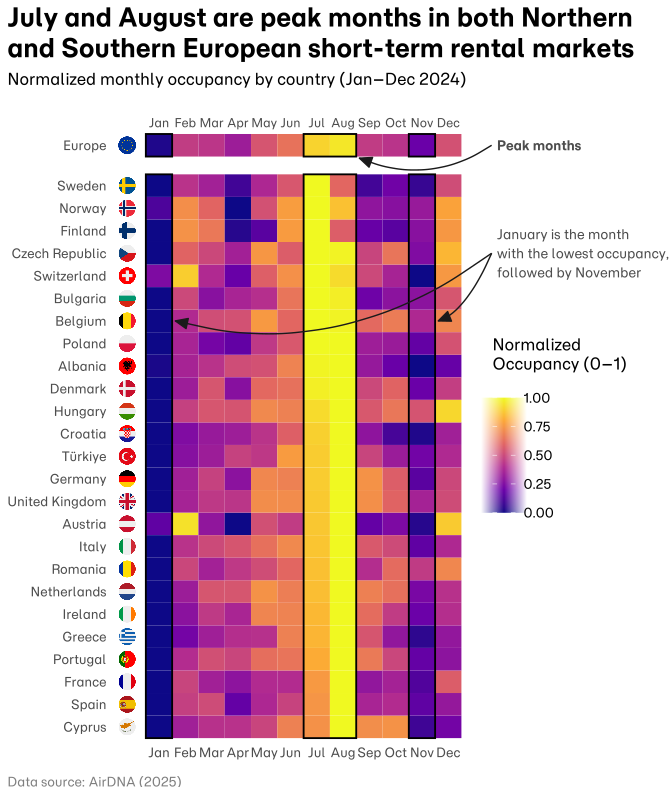
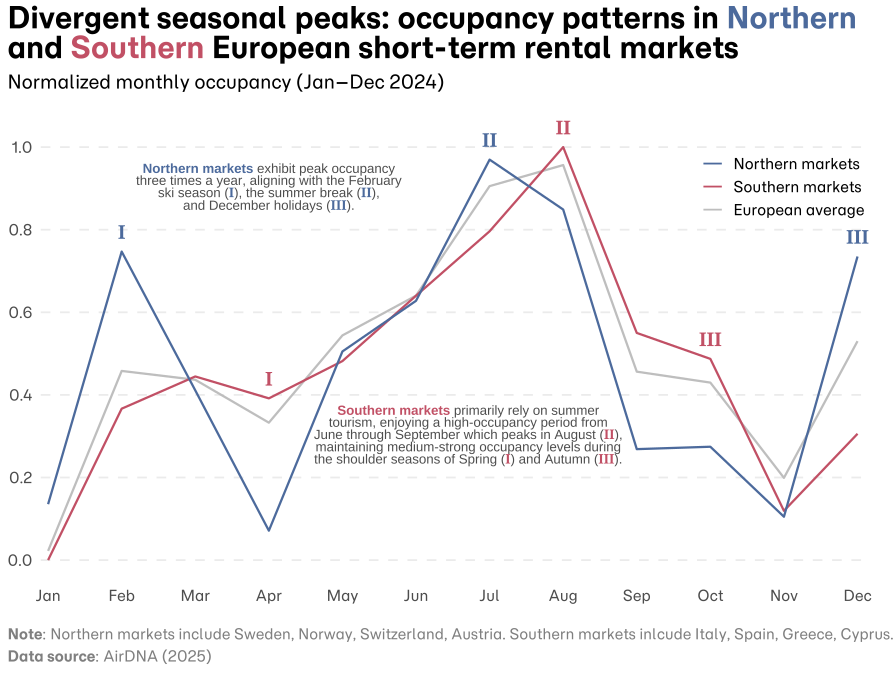
Despite huge differences in climate, latitude, and traveler motivation, Europe’s short-term rental markets (STRs) behave as if they run on the same clock. From the sun-baked Mediterranean to the cool Nordics, occupancy levels surge in the exact same six-week window every year: July and August. This is not a weather story—it’s the result of Europe’s synchronized school calendars, summer workplace shutdowns, airline capacity cycles, and a continent-wide cultural preference for the “big summer holiday.” In this article, we look at the factors that drive this pattern and we analyse short-term rental data to quantify shows a structural pattern: Europe travels together.
Europe’s summer clock: the seven factors that align travel demand
1. Europe has a structurally synchronized holiday calendar
Across the continent, school holidays and collective holiday periods concentrate in late June to early September, with the peak in July-August. This alignment drives demand because:
Families-one of the largest segments of STR users-are restricted to summer breaks.
Many workplaces still follow traditional summer shutdown or reduced-operations periods.
Italians, French, and Spanish workers take long annual holidays in August (e.g., Italy’s Ferragosto, France’s les vacances d’été), creating spillover demand both domestically and abroad.
This continental synchronization effectively compresses demand into a two-month window, regardless of climate differences among markets.
2. Aviation and transport capacity peak in summer
Airlines and rail operators shift massive capacity into the July-August period:
More routes and higher frequency of flights
Seasonal connections to secondary leisure airports (Greek islands, Spanish coast, Nordics, Alps)
Lower perceived travel risk (weather delays, cancellations)
This expanded capacity lowers effective travel friction and allows markets across Europe to feel the same demand pulse, even if their climates differ.
3. Europe-wide cultural preference for summer travel
Surveying travel patterns across the EU shows summer as the “default” vacation season. Key reasons:
Warmer temperatures (even in northern Europe) unlock beaches, lakes, outdoor dining, and cultural festivals.
Seasonal attractions (coastal towns, islands, national parks) fully activate only in summer.
Shared European tradition of “the big summer holiday,” shaping expectations around ideal travel timing.
This cultural norm harmonizes seasonality across markets.
4. In hotter southern markets, July-August remains peak due to international-not domestic-demand
Southern Europe becomes extremely hot in mid-summer, which leads domestic travelers to:
Travel earlier in June or later in September
Favor mountains and cooler regions
Book shorter trips
But international arrivals (especially from northern Europe, the US, Canada, and Latin America) overwhelm these domestic shifts. Long-haul travelers:
Are tied to summer school schedules and fixed vacation periods
Prefer guarantee of sun (even very hot sun)
Spend more per stay on coastal or island destinations
Thus, international travel volume compensates for heat-avoidance behavior among locals.
5. Long daylight hours push travel demand northward
Northern Europe has a major seasonal advantage: the longest and brightest days of the year occur in June-August, making these months uniquely appealing for:
Outdoor recreation
City tourism
Festival and events season
Nature-based trips (Nordic fjords, Scottish Highlands, German and Swiss lakes)
Even though the climate is milder than the Mediterranean, consumer demand responds much more strongly to daylight than to absolute temperature, which explains the high occupancy in northern markets.
6. July-August is the period of highest international tourist arrivals to Europe
UNWTO and Eurostat data consistently show that:
International arrivals to Europe spike sharply in Q3.
For many countries, July and August represent 30-40% of annual tourism inflows.
Since the STR market is highly dependent on international visitors in major cities and leisure destinations, occupancy peaks align across the continent.
7. Supply-side patterns amplify the demand concentration
STR supply also increases in summer:
Rural homeowners open second homes for tourism only in July-August.
Seasonal hosts in coastal and alpine regions list properties during the profitable summer period.
Hotels run close to full capacity, pushing overflow demand into STRs.
This synchronized supply expansion meets the synchronized demand shock-further reinforcing the July-August peak.
What do the STR industry data reveal?